A Midterm View of the PNoy Presidency
 |
| photo courtesy of www.inquirer.net |
On September 21, 2012 , the human rights
community commemorated the day of the signing of Martial Law 40 years ago by
then President turned Dictator Ferdinand E. Marcos. It was a couple of days
later, on September 23, 1972
when it was declared over nationwide television along with massive arrests of
political opponents, rivals and dissidents of the administration.
The
slogan and theme of the activities were mostly, Never Again… never again will
the Filipino people let a government curtail its rights and freedoms… never
again to martial law but irony of ironies… nine days before the 40th
commemoration of the declaration of Martial Law, the current administration,
declared RA 10175, the Cybercrime law, a law that will curtail freedom of
expression over the internet.
HALFWAY
THROUGH
In
2010, on the first automated presidential election in the country, Benigno
Simeon Aquino III became the president of the Republic of the Philippines
High
hopes and expectations were given to his presidency. For one, it was refreshing
to have a reluctant president. In the
beginning of the presidential election, Aquino was not even a candidate. He was
convinced to run after the death of his mother Former President Corazon Aquino where
we witnessed a huge outpouring of grief and sympathy reminiscent of the wake
and funeral procession of Benigno “Ninoy” Aquino Jr. in 1983. After a time, he later announced his
presidency. His seeming reluctance to run was the total opposite from the
impressions made by his predecessor, Gloria Macapagal-Arroyo. Even when she
announced that the elections will push through, there were fears that a No-el
(No elections) scenario could happen.
Another
reason for the high expectation on the Aquino presidency was because the
president is a legacy candidate. Being a son of a former political prisoner who
was martyred during the tumultuous times of the Marcos Dictatorship, late
Senator Benigno ‘Ninoy’ Aquino, Jr. and the president who became the leader
after the EDSA revolution there was a general hope that the saying that the
apple does not fall from the tree will be true in his case.
His
slogan, Kung walang kurap, walang mahirap (if there is no
corruption, no one will be poor) also played to the sentiments of the Filipino
people. With 1/3 of its people under poverty rate[1],
it is no wonder that such slogan brought hope to the Filipino people.
In
the President’s inauguration speech, delivered in the vernacular, the president
tried to deliver his point through figurative language imagery, his concept of
leadership was explicit with his walang wangwang (no sirens) statement,
his declaration that the Filipino people was in fact his “boss” and that his
governments direction is a matuwid na landas (straight road) resonated
with the people.
However,
three years after his inauguration, the President is yet to deliver on any of
his promises.
MATUWID NA LANDAS GONE AWRY
Kung Walang Kurap….
The
campaign slogan of the President that resonated with the people giving hope
that through straight government efforts to curb corruption will somehow later
translate to an alleviation of the economic and social conditions of its
people.
 |
| photo courtessy of scoopboy.com |
There
is no question in PNoy’s pursuit to run after officials deemed corrupt,
especially those who served in the previous administration. His three State of
the Nation Address (SONA) has prioritized reporting alleged corrupt practices
of the past administration. Cases of graft and corruption were charged to
numerous personalities of the last administration. The current administration
has brought two sets of charges against Mrs. Arroyo[2].
The first charge against Mrs. Arroyo is for allegedly cheating in the 2004
elections otherwise known as the Hello Garci Scandal, when a wiretapped
conversation allegedly between President Arroyo and Comelec Commissioner
Virgilio Garciliano was presented to media. The next was related to allegations
of misuse of $8.8 million in state lottery funds during her administration[3].
Arroyo’s appointed Supreme Court Justice Renato Corona, was also impeached
through the efforts of PNoy’s allies in the House of Representatives.
 |
| photo courtesy of inquirer.net |
Though
these efforts to run after those who committed graft and corruption are noted,
there is a question on how serious is the Aquino government in ensuring that
these practices be stopped.
One
of the earlier legislative promises of the Aquino government was that there
will be transparency and that it will support the passing of the Freedom of
Information bill that remains in Congress.
Transparency
is the key way to deter and detect corruption and to safeguard the integrity of
the government[4]
and one of the most systematic way to greater transparency is through a general
right of access to official information – a Freedom Of Information (FOI) law[5].
After
the Corona impeachment where the Chief Justice (CJ) was impeached due to
Article 2 of the impeachment complaint that states “RESPONDED COMMITTED
CULPABLE VIOLATION OF THE CONSTITUTION AND/OR BETRAYED THE PUBLIC TRUST WHEN HE
FAILED TO DISCLOSE TO THE PUBLIC HIS STATEMENT OF ASSETS, LIABILITIES, AND NET
WORTH AS REQUIRED UNDER SEC. 17, ART. XI OF THE 1987 CONSTITUTION,”[6]
hopes
were high that the new CJ will ensure transparency of the courts.
 |
| photo courtesy of wikipedica.org |
But
hopes were failed by the Aquino appointed CJ Maria Lourdes Sereno. In new
guidelines issued by the Sereno court, the tribunal imposed additional
requirements for accessing the SALN of the members of the courts.
These
are the additional requirements
- All SALN requests must explain the purpose and the individual interests of the requesting parties
- The interest of the requesting party in the SALN “must go beyond pure or mere curiosity.”
- The requesting party must not have any derogatory record.
- All decisions on the release of the SALN are now made by the Court en banc.[7]
Walang
Mahirap…
On
his latest State of the Nation Address, PNoy boasted of the positive credit
action and multiple all time high in the Philippine Stock Exchange as exemplary
proof of how the economy is growing and the improvements compared to that of
his predecessor.
Sadly
though, these alleged gains in the economy did not trickle down to the majority
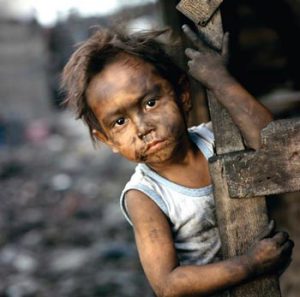
of its people that remains poor. As of the third quarter of 2012, 47% of
families considered themselves as Mahirap (poor)[8]
according to a self-rated survey of poverty conducted by the Social Weather
Station (SWS). This is considerably better from the result last May 2012 where
51% or an estimated 10.3 million Filipinos considered themselves poor.
However,
on another survey conducted by SWS for the same period, there has been a rise
on Hunger experience when 21% or an estimated amount of 4.3 million families
experienced involuntary hunger at least once in the past three months. [9]
Redefining
Mahirap
 |
| photo courtesy of streetkdspm.wordpress.com |
A
topic of contention is the definition of poor by the Aquino government.
According to the National Statistical Coordination Board (NSCB), the United
Nations Statistical Commission which prescribes international standard and
guidelines on statistical measurement and practices, has not prescribed any
international standard to measure poverty.[10]
Hence, there was a need for the NSCB to develop their own which gave birth to
the determination of the poverty line threshold.
The first development on poverty measurement
was done by the Statistical Coordination Office of the NEDA (that later became
the NSCB) in 1987. In the earlier versions non-food needs such as recreation
and purchase of durable furniture and equipment were included which was later
tweaked in 1992 and again in 2002.
 In
1992, the official methodology starts with the computation of the food
threshold which refers to the cost of basic food requirements as defined by
the Food and Nutrition Research Institute of the Philippines (FNRI) to satisfy
100 percent adequacy for the Recommended Dietary Allowance (RDA) for energy and
protein and 80 percent adequacy for the RDA for vitamins, minerals and other
nutrients. [11]
In
1992, the official methodology starts with the computation of the food
threshold which refers to the cost of basic food requirements as defined by
the Food and Nutrition Research Institute of the Philippines (FNRI) to satisfy
100 percent adequacy for the Recommended Dietary Allowance (RDA) for energy and
protein and 80 percent adequacy for the RDA for vitamins, minerals and other
nutrients. [11]  |
| What's for breakfast? change in the food threshold |
Aside
from the food threshold though, basic non-food requirement were also computed.
The basic non-food requirements include clothing and footwear; housing
(including fuel, light and water); maintenance and minor repairs; and rental of
owner-occupied dwelling units; medical care; education; transportation and
communication; non durable furnishings; household operations; and personal care
and effects. [12]
The
cost of the basic non-food threshold plus the food threshold equals the poverty
threshold. [13]
However,
in 2011 further tweaking by the NSCB to the food threshold it has revise[14].
d the
food menu with the cheapest food combination deemed to satisfy nutritional
requirement for three meals daily
The
newest menu has removed children’s milk for breakfast, and any extra separate
viand of fish or meat and fruit dessert beyond once a day. – Or the minimum
amount required to meet food needs - is currently pegged at Php 32.02 per
person per day or Php 10.70 per meal.[15]
Noticeably
though, each revision of the food threshold to measure poverty, also changes
the numbers of the poor in the country making it seem that the government has
made advancement in eradicating poverty as stated in the Millennium Development
goal.
Defining
poverty at the subsistence level, the 2011 methodology puts the poverty
threshold where a family can survive at the barest existence to spend for food,
mobility and any shelter from natural elements during the night. [16]
Tiding
over Poverty
 |
| courtesy of mindanews.com |
PNoy’s
economic plan for poverty alleviation remains to be a dole out. Initially
started by his predecessor, the Pantawid (to tide over) Pamilyang Pilipino
Program (4Ps) otherwise known as the Conditional Cash Transfer (CCT) is still
the program used by the government in ensuring that it meets the MDG commitment
of
1.
Eradicate Extreme Poverty and Hunger
2.
Achieve Universal Primary Education
3.
Promote Gender Equality
4.
Reduce Child Mortality
5.
Improve Maternal Health[17]
Chosen
beneficiaries receive Php 500.00 per month benefit for health and nutrition
expenses and Php 300 per month per child benefit for education expenses. A
maximum of three children per household is allowed, [18]
totalling to a maximum of PHP 1, 400. 00 cash grant.
Certain
conditions are set by the government that the beneficiaries have to meet in
order to receive the cash grant such as:
- Children 0-5 years of age, get regular preventive health checkups and vaccines
- Children 3-5 years of age, attend day-care / preschool at least 85% of the time
- Children 6-14 years of age, attend elementary or high school at least 85% of the time
- Pregnant women must get pre-natal care, must be delivered by a skilled birth attendant and must get post-natal care
- Mothers must attend mother’s classes
- Parents must attend Parent Effectiveness Seminars and Responsible Parenthood Seminars[19].
According
to the President’s SONA, the 4Ps’ program currently has 3 million family
beneficiaries as of Feb 2012.
At
first glance, there really seem to be gains made through this dole out. In a
study of Ateneo’s Institute of Philippine
Culture
On
the other hand though, it remains unclear whether the positive behavioural
changes observed were simply a result of beneficiaries’ compliance with the CCT
conditionalities (and could therefore disappear once the program ends or
actually signal the onset of long-lasting improvements). [21]
 |
| photo courtesy of kuro kuro.org |
Critics
are also commenting on the ballooning of the number of beneficiaries when in
reality, government facilities such as the schools and health centers were not
ready for it. The country remains saddled with insufficient and poor quality
educational and health facilities which may not be able to absorb the
additional users.[22]
Another
consideration is the question of the investment being placed on the 4P program,
though it seems to be an investment in the next [23]
not on local capital.
generation, the program is also
an investment that is drawing a substantial chunk of its capital from foreign
loans
Currently,
the program is being funded partly through loans from the World Bank (WB) and
Asian Development Bank, amounting to $805 million.[24]
Furthermore,
there is a question whether the CCT program might be overestimating the
potential benefits from developing ‘human capital” through education and health
requirements. According to Ibon, there are some 4.6 million unemployed
Filipinos in the country of whom nearly nine out of ten (87%) are reasonably
educated – 44% are high school undergraduates or graduates and 43% are at least
college undergraduates or graduates. Meaning being a beneficiary of the program
may not guarantee in producing higher income earners of the future.
On
Demolitions
The
first case documented for the year is a violent demolition in Barangay Corazon
de Jesus, San Juan City January
10, 2012 allegedly assisted by the Philippine National Police, the
fire department and the SWAT.
 |
| photo courtesy of old squat net.com |
Around
23 persons were wounded in this violent dispersal and an additional 18 persons
were allegedly arrested by the PNP. The PNP claimed that their members and
members of the demolition crew were also hurt during the fight.
According
to a news report, the disputed land owned by the city government is being
planned to be used for building a new city
hall and government-one-stop-shop. They also claimed that the defiant residents
were only minorities[25],
since most residents agreed to be relocated to Barangay San Isidro, Rodriguez,
Rizal and be given Php 10,000 cash and half a sack of rice.
Another
violent demolition reported for 2012 is the demolition of the Silverio Compound
in Sucat Road , Parañaque on
April 23, 2012 . According
to the residents, they were only forming a human barricade to prevent the
authorities to enforce the demolition order. Though the Paranaque
local government tried to insist that they will be demolishing only the flea
market at the front of the compound, the residents feared that it will begin
the demolishing of the whole area.
In
2003, city ordinance 806 authorized the Parañaque City government to
expropriate a 9.7 hectare property in the Town of San Isidro[26],
the area otherwise know as the Silverio Compound. The area is supposed to be
used to build a socialized housing project for the area’s thousands of informal
settlers and make them legitimate homeowners.
 |
| photo courtesy of the borneopost. com |
However,
with the change of executive head in Parañaque comes a different appreciation of
the land. The current Mayor, Jun Bernabe wants to demolish the homes of the
residents of Silverio Compound to make way to “Silver Homes”, a neighbourhood
of mid-rise residential buildings to be financed by the National Housing
Authority and sold to residents through affordable payment structures[27].
The
Bernabe Silver Homes plan will accommodate 1,800 families and use 3 hectares of
the disputed land. The rest of the property is planned to be used as a
commercial complex that can serve as an income source for the city government[28].
The
big problem is that even in 2008, when the previous mayor filed for the
expropriation of the Silverio Compound, the lists of the Plaintiff’s
constituents was already at “about 25,000 families, more or less, for the past
twenty years or more”[29],
which means that even with the 2008 data, around 23,200 families will be deemed
homeless with Bernabe’s Silver homes plan.
The
violent dispersal resulted in the death of a young man, Arnel Leonor who was
shot, according to ballistic by either a 9mm or a. 38.
The
police is said to have a 9mm gun as standard issue weapon.
Human
Rights Issue
In
an interview with Radio New Zealand, the President defended the human rights
record of his administration and even vent how human rights is for everybody
and invoked the state forces rights that must be respected and upheld[30].
He
also blamed the alleged “very vocal leftist community” in the country which is
“very good in propaganda” downplaying the atrocities that has been committed by
state forces.
But
this claim is not reflective of the statistics of human rights violations collated
by TFDP. As of December 2012 there has been 104 human rights violations
documented.
Mining
as a Human Rights Issue, the double speak
On July 6, 2012 , President
Aquino signed Executive Order No. 79 institutionalizing and implementing
reforms in the Philippine Mining Sector providing policies and guidelines to
ensure environmental protection and responsible mining in the utilization of
mineral resources[31].
This is the response of the Aquino government to the clamour for total mining
ban from civil society organizations including the Catholic Bishops’ Conference
of the Philippines (CBCP).


Unfortunately,
though the EO’s title gives a gleam of hope, the framework of the executive has
not been to stop mining all together but only to get its “fair share” of the
revenues from mining[32]
but with the meaning of “fair share” still debatable.
It
has further strengthened the power of legislation, as it gives Congress the
power to determine entry to new mineral agreements with the context of
rationalization. The context of rationale is defined solely by who is
rationalizing. What is reasonable to a mining investor may be totally
unreasonable to the community affected by mining. [33]
According
to Alyansa Tigil Mina (ATM), the EO has failed to address the substantial
issues on mining:
1.
Shifting the policy from “earning profits from mining” to a “rational
management of our mineral resources”,
2.
Ensuring that mining complies with sustainable development, human rights,
poverty-eradication and full human potential; and
3.
Give a reprieve to communities and the natural resources they live off, from
the real threats of destructive mining. [34]
Mining
Related Human Rights Abuses
Numerous
mining related cases were documented by TFDP for the year 2012.
One
case is the killing of Francisco Canayong, a 64 year old staunch human rights
defender and anti-mining advocate. Canayong was stabbed to death by
unidentified assailants at about 2 PM
along the national highway in Salcedo, Eastern Samar .
His
body was found across the street from where his tricycle was found. Before his
death, there were said to be verbal threats against him from civilians involved
in the mining activities in the area.
 |
| photo courtesy of interaksyon.com |
Among
the victims were two boys, fourteen and eight years old, respectively and their
mother, Juvy Capion, who was allegedly pregnant as well. There were two
survivors, both girls, a four year old and an 11 year old, the older one was
wounded.
According
to witnesses, they heard rapid gunshots coming from the victim’s farmhouse and
they rushed over to see what was going on. The witnesses saw two of the children
taking refuge at an adjacent house, the older child covering the younger one as
the military poked their guns at them.
The
witnesses tried to intervene for the children and the family but the military
was insistent. Allegedly, they were in pursuit of Daguil Capion, the father of
the children who was also a tribal leader of the indigenous people’s tribe,
B’laan and is said to have taken up arms against the entry of a mining firm in
their ancestral domain. Daguil was a suspect in a 2010 ambush of three
construction workers of Sagittarius Mines, Inc. (SMI).
According
to the witness, the mother, Juvy even pleaded to the military to stop firing
their guns since they were already wounded but to no avail. The military
strafed the house again were Juvy and her son lay wounded, eventually killing
them.
Witnesses
claimed that Daguil was not inside the house when the massacre happened. [35]
On Political Detention
Until
now, three years into his presidency, President Aquino is yet to set free a
political prisoner through his own efforts, a sad precedent for a son of a
political prisoner and exile.
On
2011, he almost sent Mariano Umbrero, a political prisoner that had terminal lung
cancer to freedom but his efforts went a little too late. Mariano Umbrero died
on July 15, 2011 , four days
before the President granted him executive clemency[36].
In a
speech prior to the executive department finding out that Mr. Umbrero, the
person he granted clemency to was already dead, the President admitted he had a
hard time approving the recommendations for clemency. He even said that good
conduct time allowance accorded to convicts must be done away with, and that he
would prefer the justice system in the US ,
where a person meted life imprisonment would really spend his lifetime behind
bars without any pardon or parole[37].
For
the president it seems that no restitution could be given without extracting
the full sentence of a prisoner plus he does not even recognize the difference
of a common criminal to that of a political prisoner.
On
September 21, 2011, the 39th year anniversary of the declaration of
Martial Law, Edwin Lacierda, Presidential spokesperson, that as far as there
‘term of reference’ go, they believe that the Philippines has no political
prisoner[38].
In
Task Force Detainees of the Philippines (TFDP) ‘term of reference’ as of December 31, 2012 there are
currently 328 political prisoners and detainees in the country.
TFDP
defines a political prisoner with the same criterion that was used when it
first started in 1974 during the height of the Martial Law Period:
1. Detained or imprisoned individuals who
advocate change to established supposed order, or argue the need for reform of
long-established policies, or engage in acts signifying some degree of
disloyalty; or active involvement in political movements with peaceful or
resistance means;
2. Charged with non-bailable offense and
common crimes instead of political related offense;
(The
Hernandez doctrine became part of our country’s jurisprudence in 1956. The
Supreme Court ruled in the case People of the Philippines
vs. Hernandez that a person who commits a political offense could be charged
with rebellion but not with common crimes such as murder, arson, robbery, etc.
It ruled that the act of rebellion would already include and absorb these
crimes. The practice of the government of filing criminal charges such as
murder, kidnapping, robbery, arson, etc. against persons suspected of
committing acts of rebellion are meant to destroy the credibility of and
demonize political prisoners.)
3. Established political motive of the
arrest even if actual charges are not in anyway related;
(Circumstantial
evidence to help establish intent of the arrest)
4. Tortured and forced to admit
affiliation with armed rebel groups and criminal offense. It is routinely used
to force confessions and the evidence obtained by torture is used in court to
sentence individuals;
5. Branded or tagged as terrorist by state
agents but actually with sufficient proof or endorsement or certification by
their colleagues as active member of progressive or revolutionary
organizations;
(engages
in activities that the government considers contrary to its policies, and
therefore they call it ‘anti-government’, ‘a security threat’, or even ‘terrorism’)
6. Individuals who are arrested as a
result of participating in a peaceful dissent (e.g. rally, picket, boycott,
etc.);
7. Civilians accused of being members of
armed rebel groups. Some political prisoners/detainees were not directly
involved in politics before their arrest. Others never considered themselves as
political before they were arrested, but eventually the government has actually
made them political through their imprisonment.
(Mere
association with members, rather than actual membership of an “outlawed group”
can land someone in considerable risk of being arrested.)
From
January 1 to September 30, 2012 ,
TFDP has documented 59 cases of arrests and detention with 125 victims.
 |
| photo courtesy of soundcloud.com |
One
case is the arrest of Rolly Panesa, a security guard mistaken to be a high
ranking member of the New People’s Army.
According
to Rolly, on October 5, 2012, at around 11:30 PM he and his family were in
Anonas, Quezon City after they attended a party when they were apprehended by
combined elements of the 2nd Infantry Division, Philippine Army,
other AFP units and the Philippine National Police (PNP). No warrant of arrest
was presented to them.
Rolly
cannot recall much details of his arrest since he was a little tipsy after the
party. What he remembers was that they were boarded to a military vehicle and
brought to Canlubang, Laguna.
He
also recalls that his interrogators were forcing him to admit to be a certain
Benjamin Mendoza, allegedly a leader of the New People’s Army with a bounty
over his head of Php 5.6 million but cannot recall the details of his
interrogation. But based on his face, the victim who had bruises all over his
face, lips swollen and eyes red, could have been tortured.
Rolly
also did not know where his wife and children were brought.
On October 8, 2012 , Rolly was
transferred to the Special Intensive Care Area, Camp Bagong Diwa, Bicutan, Taguig
City Rizal Medical
Center
Rolly
later found out that his family has been freed.
Unfortunately,
Rolly’s case of mistaken identity is not that unusual. TFDP has encountered
numerous cases similar to him through time, where an innocent person is
suspected to be a person with a bounty over his/her head. This is also what
happened to Abdul Khan Balinting Ajid, a baker suspected of being a member of
the Abu Sayyaf last 2011.
TORTURE
Ajid
was arrested by members of the Special Operation Task Force Basilan (SOTF-B) at
his home at Barangay Libug, Sumisip, Basilan
Province July 23, 2012 .


The
members of the arresting team wanted him to admit to be a certain Kanneh
Malikil , an alleged member of the Abu Sayyaf and brutally tortured him
during interrogation.
According
to the victim, he experienced being blindfolded, beaten-up, sodomized, water
boarded, paddled, strangled, suffocated, flicked in the testicles, and burnt by
his captors inside the military camp.
The
last ordeal he suffered was when the military men took a liter of gasoline and
poured it over the victim. Gasoline was poured on him by his captors and later
set him on fire. All these torture were done fearlessly inside a military
compound.
Though
the actual perpetrators of the torture admitted in their affidavits to the
burning of Ajid were recommended for dismissal by the Commission on Human
Rights (CHR) after its investigation, it has excluded the
commander of the SOTF-Basilan and Capt. Arvin Llenares, head of the arresting
team, citing that they neither consented nor did they have knowledge of the
alleged acts[39]happening
inside their yard.
The
military claims that the Ajid case was an isolated incident[40],
but regardless of this claim, TFDP has documented 16 cases of torture with 21
victims from January 1 to September
30, 2012 , four of which involved the military.
One
case is that of Faustino Gerbon a worker arrested by around 10 combined
elements from the Police Operations Groups, Northern Samar Police Provincial
Office, members of 803rd Brigade of Philippine Army, Military
Intelligence Group 8 and the Intelligence Service of the Armed Forces of the Philippines .
According
to Faustino, it was around 9:00 AM of July 8, 2912 and he was cleaning the
front yard of his employer’s store, when a police car with civilian-clothes men
arrived and got off from the car.
Two
of them suddenly grabbed his hands and handcuffed him behind his back. When he
asked them why they are doing that to him, they replied that he was an NPA.
Faustino said he was taken inside the mobile
and headed towards the police station where he was interrogated. He was being
made to admit he is a member of the NPA.
At
about 11 AM , he was brought to the
headquarters of 803rd Brigade in Dalakit, Catarman by four men. Upon
arrival at the camp, he was blindfolded and subjected to tactical
interrogation.
According
to Faustino, they wanted him to admit that he was a rebel and that he was
responsible for the killing of Mayor Ceasar Vicencio of Catubig, Northern
Samar . When he denied their allegations, he was punched in the
stomach and was threatened to be killed. When his interrogators failed to get any information
from him, they tied him to a coconut tree, one of his assailant shit and kicked
him.
Still
in blindfold, Faustino was made to ride a vehicle before he was dropped off he
did not know where but he sensed he was still inside the camp.
At
around 4 AM , his blindfold was taken
off. They took him inside a car and they went around the Catarman Bus Terminal
until 5:30 AM . He was told by the men
to look for NPA rebels.
Later,
Faustino was brought back to the provincial jail. Again, he was blindfolded.
They threatened him that he will be drowned at the fish pond.
After
this Faustino was brought back to the army camp then again brought to the
police station in Catarman where he was detained for three (3) days before he
was brought to Bobon Provincial Jail.
On
Enforced Disappearance
In
the beginning of year 2012, a case was documented by the Families of Victims of
Involuntary Disappearance. Three Islamic Scholars were last seen boarding Air Philippines
in Zamboanga City Manila on January 3, 2012 . They were on their
way to Sudan ,
and were supposed to get an interconnected flight in Manila .
Najir Ahung, Rasdie Kasaran and Yusup Mohammad were still able to communicate
with their families that they have arrived in Manila .
However, they were not seen or heard from again after this.
FIND
on February 14, 2012 , was
able to confirm from Air Philippines
baggage section that checked-in bags of Najir and Yusup were never claimed[41].
Relatives
of the victims suspected that government security agents were responsible in
the disappearance because there had been unconfirmed reports that linked the
victims to the ambush of Philippine Special Forces by suspected members of the
Moro Islamic Liberation Front (MILF) reportedly joined by villagers near
Al-Barka, Basilan[42].
FIND
along with Asia Federation Against Involuntary Disappearance (AFAD) and the
Philippine Alliance of Human Rights Advocates (PAHRA) has asked for assistance
from AFP’s Human Rights Office Chief Colonel Domingo Tutaan and Colonel Henry
Libay of Task Force Usig of the PNP but the victims are still to be found.
According
to FIND’s website, 1, 147 victims of enforced disappearance are still to be
found. The years 1983 to 1985 recorded the highest number of incidents of
disappearances followed by the years 1987 and 1989. 1983-1985 was the peak of
the campaign against the Marcos dictatorship. 1987-1989 was the period of the
“total war policy” of the Corazon C. Aquino regime against insurgents[43].
For the present Aquino regime, FIND has recorded 17 cases of enforced
disappearance, 7 of whom are still missing, 4 have surfaced alive and one found
dead. [44]
On October 16, 2012 , the Philippine
Congress ratified the law against Enforced Disappearance. It defines enforced
disappearance as the “arrest, detention, abduction or any other form of
deprivation of liberty committed by agents of the state or by persons or groups
of persons acting with the authorization, support, acquiescence of the state,
followed by a refusal to acknowledge the deprivation of liberty or by
concealment of the fate or whereabouts of the disappeared person.”
On December 21, 2012 , PNoy signed the
bill into law. The law will criminalize enforced disappearance and those who
will be found guilty committing such crime will be sentenced to 20 years and 1
day to 40 years imprisonment.
The law
also has notable key provisions such as:
it’s declaration of the unlawfulness of the order of battle and the
rights of person to disobey such order, it also holds liable the immediate
commanding officer of the military unit or the immediate senior police official
for acts that led to the commission of enforced disappearance by his or her
subordinates. [45]
Non
Priority of Human Rights
Only
three years remain of the PNoy administration. Until now, the Human Rights
community is still waiting for the PNoy government’s human rights plan via the
National Human Rights Action Plan.
The
NHRAP was a commitment of the Philippine Government during the United Nations
Universal Periodic Review of HR situation in 2008. The Arroyo administration
prepared a NHRAP in 2009, and is supposedly being reviewed by PNoy’s
administration upon ascendance to the presidency. Two years after becoming the
president, PNoy is yet to release the NHRAP.
This
puts into question the commitment of his and his government in prioritizing
human rights.
[1] http://business.inquirer.net/money/breakingnews/view/20100527-272374/No-reduction-in-RPs-poverty-rate-NSCB
[2] http://topics.nytimes.com/top/news/international/countriesandterritories/philippines/index.html
[3]
ibid.
[4]
Frankel, Maurice Freedom of Information and Corruption http://www.cfoi.org.uk/pdf/corruptionmf.pdf
[5]
ibid.
[6] http://www.coolbuster.net/2012/05/corona-guilty-convicted-under.html
[7] Diokno:
Accountability must begin with our courts pcij.org/blog/
[8]
Third Quarter 2012 Social Weather Survey: Families rating themselves as Mahirap
or Poor eased at 47% www,sws,org.ph
[9]
Third Quarter 2012 Social Weather Survey: Hunger rises to 21.0% of families;
Moderate Hunger rises, while Severe Hunger falls www.sws.org.ph
[10] http://www.nscb.gov.ph/headlines/StatsSpeak/2011/021411_rav_joe_bbb.asp
[11]
Virola, Romulo “Statistical Challenges on Poverty Reduction in the Philippines ”
www. nscb.gov.ph/technotes/poverty/partii/annex4_2.pdf
[12]
ibid.
[13]
ibid.
[14]
Latest poverty measure: excluding the poor from the poverty account http://www.ibon.org/ibon_features.php?id=250
[15] Latest
poverty measure: excluding the poor from the poverty account
http://www.ibon.org/ibon_features.php?id=250
[16] Latest
poverty measure: excluding the poor from the poverty account
http://www.ibon.org/ibon_features.php?id=250
[17] http://pantawid.dswd.gov.ph/index.php/about-us
[18]
ibid.
[19] http://siteresources.worldbank.org/INTPHILIPPINES/Resources/4PsDSWD.pdf
[20] http://pcij.org/stories/good-news-and-bad/
[21]
ibid.
[22]
Conditional Cash Transfers (CCTs) : Temporary, Diversionary, and
Indefensible http://www.ibon.org/ibon_features.php?id=116
[23] de los Reyes, Che CCT debt trap? Future
of pro-poor deal a poser http://pcij.org/stories/cct-debt-trap-future-of-pro-poor-deal-a-poser/
[24] ibid.
[25] http://newsinfo.inquirer.net/126307/12-hurt-as-squatters-resist-demolition-of-shanties-in-san-juan
[26] http://www.rappler.com/nation/4702-the-demon-of-silverio
[27]
ibid.
[28]
ibid.
[29]
ibid.
[30] http://www.philstar.com/Article.aspx?articleId=862776&publicationSubCategoryId=63
[31] http://www.abs-cbnnews.com/-depth/07/09/12/pnoys-mining-eo-no-79
[32] http://www.rappler.com/business/2678-pnoy-gov-t-not-keen-on-total-mining-ban
[33] http://www.rappler.com/thought-leaders/8488-the-mining-eo-a-mixed-bag
[34] http://www.alyansatigilmina.net/content/story/august2012/atm-position-executive-order-79-s-2012
[35]
12-DDS- Capion Massacre documented by
Rita Melecio
[36] http://www.journal.com.ph/index.php/news/national/10331-inmates-death-saddens-palace
[37] http://www.philstar.com/nation/article.aspx?publicationsubcategoryid=65&articleid=710533
[38] http://opinion.inquirer.net/14895/%E2%80%98we-have-no-political-prisoners%E2%80%99
[39]
Commission on Human Rights IX, Zamboanga
City
[40] http://newsinfo.inquirer.net/39593/evidence-enough-for-military-torture-trial-says-army-head
[41] http://hronlineph.com/2012/02/25/press-release-missing-islamic-scholars-confirmed-abducted-in-naia-3-find/
[42]
ibid.
[43] http://find.org.ph/resources
[44]
ibid.
[45] http://www.rappler.com/nation/14364-bill-vs-order-of-battle-awaits-aquino-ok


